Loans for People on Benefits: Your Complete Guide to Borrowing in the UK
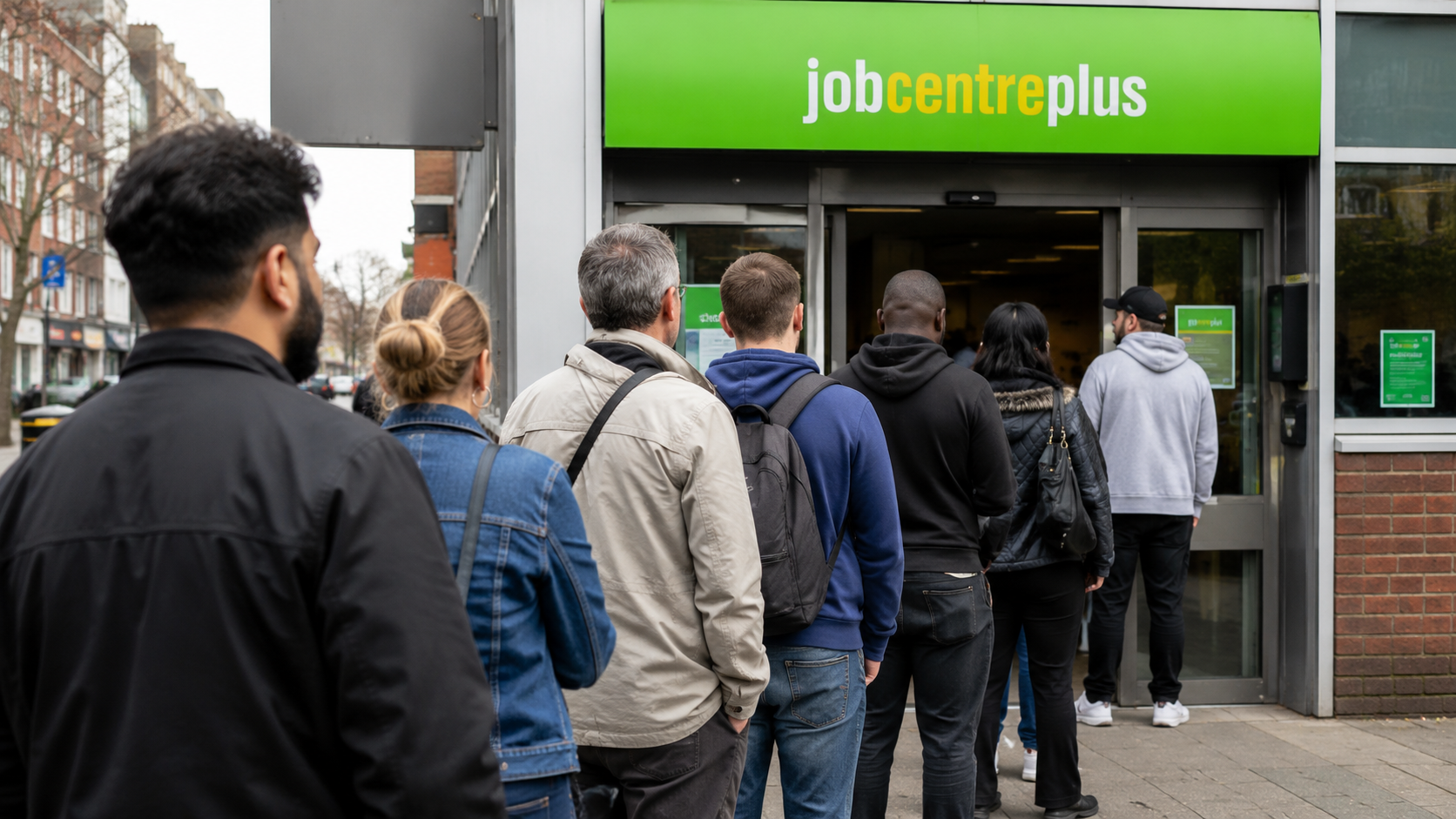
People queue outside a Jobcentre Plus office as households across the UK look for support with work, benefits and short-term financial pressure. Image: AI-generated editorial illustration.
Being on benefits doesn’t automatically disqualify you from borrowing money. But it does change your options - and it’s important to know what’s available, what to avoid, and what the real cost looks like before you commit to anything.
Whether you’re dealing with an unexpected bill, a gap between payments, or a one-off expense you weren’t prepared for, this guide covers your main borrowing options honestly - including the ones most lenders don’t mention.
Can You Get a Loan If You’re on Benefits?
Yes - but your choice of lender matters significantly. Many mainstream lenders automatically decline applications from people whose primary income is benefits, because their affordability assessments are designed around employment income. This is frustrating, but it’s not the end of the road.
What matters to a responsible lender is whether you can realistically repay. Benefits are a regular, predictable income - in some cases more stable than employment income, which can fluctuate or disappear overnight. Several lenders and schemes take this into account.
The key is finding the right type of lender for your situation, and not being pushed towards high-cost options out of desperation or time pressure.
Your Main Options for Borrowing on Benefits
1. Government Budgeting Loans and Advances
If you’re claiming certain benefits, you may be eligible for an interest-free government loan. These are the most affordable borrowing options available and should be your first port of call.
• Budgeting Loan - available if you’ve been on Income Support, Pension Credit, income-based JSA or ESA for at least 6 months. You can borrow between £100 and £1,500 interest-free, repaid from your future benefit payments.
• Budgeting Advance - for Universal Credit claimants. Works similarly: an advance repaid from future UC payments over up to 24 months. Maximum £348 if you’re single, £464 for couples, £812 if you have children.
• Short-term Benefit Advance - if you’re waiting for your first benefit payment, you can request an advance from the DWP to cover the gap.
Apply through your local Jobcentre Plus or via your Universal Credit online journal.
2. Credit Unions
Credit unions are not-for-profit financial cooperatives that often lend to people on benefits, especially if you’ve been a member for a while. Interest rates are capped by law (3% per month in England, Scotland and Wales), and many credit unions are actively set up to serve people in financial difficulty. Search for your local credit union at findyourcreditunion.co.uk.
3. Short-Term Credit Services
If you need money quickly and don’t qualify for a budgeting loan (or have already used one), short-term credit services like CashWave are designed for situations exactly like this.
CashWave is different from a traditional payday loan. Instead of interest that compounds over time, you pay a fixed monthly subscription - so you always know exactly what you’ll repay before you agree to anything.
• Borrow £50 to £500 depending on eligibility
• Apply in around 5 minutes from your phone
• Money in your account the same day if approved (dependent on bank processing times).
• A fixed monthly fee - no variable interest, no hidden charges
• Repay early and only pay for the months you use
Representative example: Representative example: Borrow £300 over 120 days. 3 payments of £130 (£100 principal + £30 fee). Interest rate: 0% p.a. (fixed). Total amount repayable: £390. Representative APR: 91.25%.. Credit is subject to status and affordability assessment.
This option makes most sense when you need money quickly and the government route isn’t available or fast enough. It’s not a long-term solution, but as a one-off bridge it’s designed to be transparent and predictable.
4. Guarantor Loans
Some lenders offer loans to people on benefits if a friend or family member agrees to cover the repayments if you can’t. Interest rates vary widely - compare carefully and make sure the person guaranteeing fully understands what they’re agreeing to. Missing repayments affects their credit rating too.
5. Local Welfare Assistance
Many local councils run welfare assistance or crisis loan schemes. These are grants or interest-free loans for people in urgent financial difficulty. Eligibility varies by council and funds are often limited, but if you’re in genuine hardship it’s worth checking your local council’s website or calling them directly.
What Lenders Look For When You’re on Benefits
Responsible lenders, regardless of whether you’re employed or on benefits, are assessing the same thing: can you repay without making your financial situation worse? Typically they look at:
• Regular income: benefits count, as long as they’re consistent and sufficient to cover repayments
• Existing debt: how much you already owe relative to your income
• Credit history: though some lenders work specifically with people who have poor or thin credit histories
• Affordability: whether the repayments fit within your regular budget
If a lender doesn’t ask about affordability at all, that’s a warning sign. A responsible lender should decline you if repaying would leave you worse off.
What to Avoid
Some lenders specifically target people on benefits because they’re seen as a captive market. Watch out for:
• Doorstep lenders who visit your home - extremely high interest rates, often 200-500% APR
• Rent-to-own stores (BrightHouse-style) - you pay far more than the item is worth over time
• Payday loans with no affordability check - if they’ll lend to anyone regardless of income, they’re not checking if you can repay
• Any lender charging an upfront fee to release your loan - this is almost always a scam
The key question with any lender: are they FCA-authorised? You can check at register.fca.org.uk. If they’re not, don’t borrow from them.
A Note on Repayment
Whatever option you choose: only borrow what you can realistically repay. Missing repayments on any loan - even a government budgeting loan - creates knock-on problems. Before you borrow, check the repayment fits comfortably within your monthly budget, even if something unexpected reduces your income temporarily.
If you’re already struggling with debt, borrowing more is rarely the right answer. The services below are free and confidential:
• StepChange - free debt advice
• National Debtline - free, confidential help
• MoneyHelper - government-backed guidance
SteadyPay Limited is authorised and regulated by the Financial Conduct Authority. FRN: 789333. SteadyPay is a credit service. Failing to make repayments may negatively affect your credit rating. If you need help managing debts, visit nationaldebtline.org, moneyhelper.org.uk, or stepchange.org.